From a thermodynamic point of view, water activity (aw) defines the energy state of water in a system and is governed by the Gibbs free energy equation.
In practical terms, it is measured as the partial vapor pressure of water (P) in the headspace of a sealed chamber in equilibrium with the sample, divided by the saturated vapor pressure of pure water (P0) at the same temperature (T):
aw = (P / P0)T = %ERH / 100
(where %ERH is the Equilibrium Relative Humidity).
The scale ranges from 0.00 (total absence of moisture) to 1.00 (pure water).
A common conceptual error: Water activity is often referred to as "free water". Although this is an intuitive mental image, it is scientifically inaccurate. A value of 0.50 aw does not mean that 50% of the water is "free"; rather, it indicates that the water present in the product possesses 50% of the energy that pure water would have under the same conditions. The lower the aw value, the less the water behaves like pure water.
Water Activity (aw) vs Moisture Content
Although related, these two parameters measure different physical properties:
-
Moisture Content (Extensive Property): Determines the total quantity of water (measured via loss on drying or Karl Fischer titration). It indicates the purity or identity of the material.
-
Water Activity (Intensive Property): Describes the quality or energy of water. It is the only parameter that correlates directly with microbial growth, chemical stability, and physical degradation.
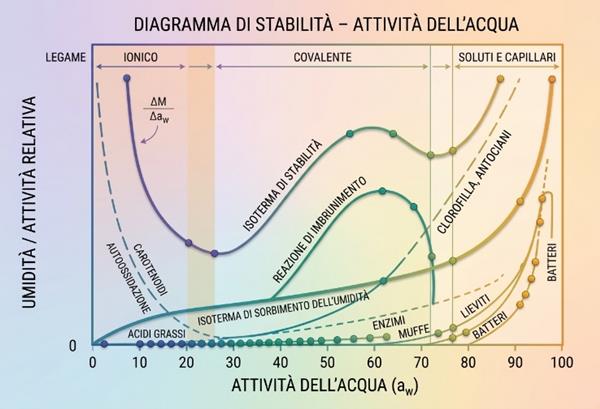
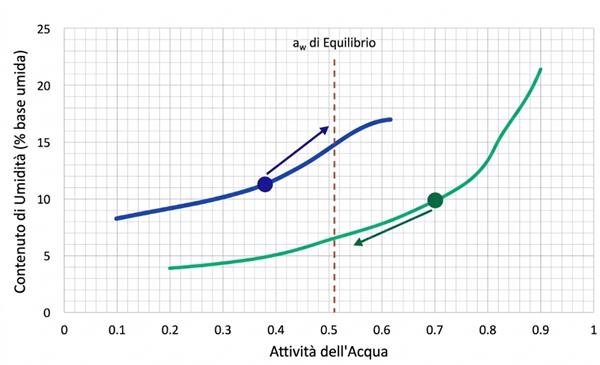
The link between moisture content and water activity is represented graphically by the Moisture Sorption Isotherm.
The Regulatory Framework: USP <922>, USP <1112>, and ICH Guidelines
Global regulations have officially clarified the primary role of aw:
-
USP <922> (Water Activity): Having become an official method, it defines guidelines for the theoretical and practical measurement of aw. It specifies instrument qualification (Classified as Group B), recommends calibration with standard solutions at least annually, and daily calibration checks.
-
USP <1112>: Highlights how microbial growth depends on aw and not on moisture content. It establishes that below the threshold of 0.60 aw, no microbial proliferation is possible. It also justifies reducing the frequency of routine microbial limit testing (USP <61> and USP <62>).
-
USP <795> and <797> (Compounded Preparations): Use aw as a discriminating factor to classify a preparation as "aqueous" or "non-aqueous", determining its shelf life and stability (Beyond-Use Dates).
-
ICH Q6A and ICH Q1A: Integrate aw into drug stability protocols and decision trees to assess microbiological risks.
Practical Applications and Diagnostics via Sorption Isotherms
Water activity analysis makes it possible to predict critical behavior of materials during the manufacturing process and storage.
Crystalline Excipients and Deliquescence
In crystalline excipients (used as diluents or protective agents for the active ingredient), the gain or loss of hydration water/deliquescence is thermodynamically governed.
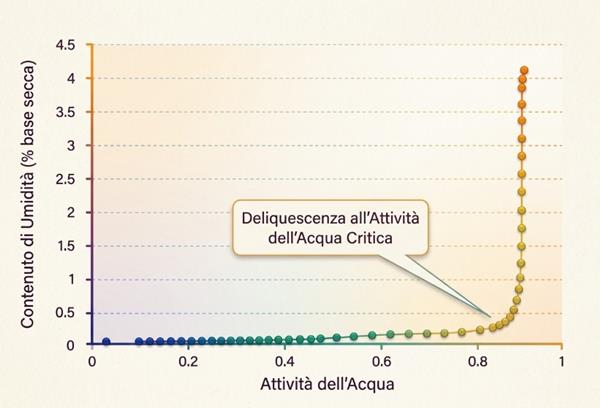
Isotherm Chart (Figure 1): The sorption isotherm for a crystalline material shows a flat curve that undergoes a sudden 90° direction change upon reaching the so-called Critical Water Activity.
Risk: Beyond this threshold, the material undergoes deliquescence, altering the dissolution rate of the drug and reducing the efficacy of the API (Active Pharmaceutical Ingredient).
Amorphous Excipients and Glass Transition
Amorphous materials are usually in a meta-stable glassy state at low humidity.
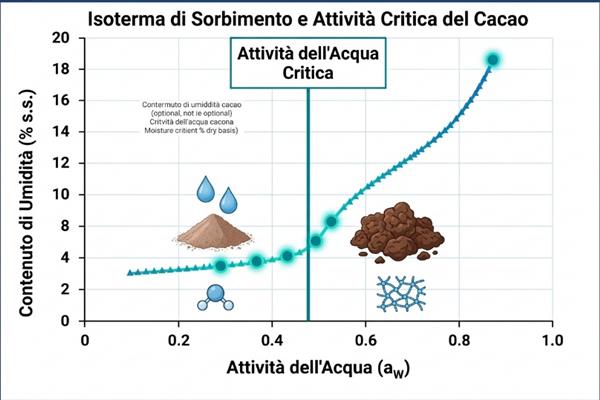
Isotherm Chart: An increase in aw causes a transition from the "glassy" phase to the "rubbery" phase (Glass Transition), visible on the sorption isotherm as a sharp inflection point (curve inflection).
Risk: Once the critical aw is reached, structural collapse, caking and clumping phenomena, unwanted crystallization, and loss of powder compressibility into tablets occur.
Other Key Applications
-
Prevention of Chemical Hydrolysis: Reduces degradation of water-sensitive active ingredients.
-
Fluid Bed Drying: Optimization of process times and temperatures.
-
Probiotic Stability: Maximizing bacterial strain survival during shelf life.
-
Primary Packaging Selection: Evaluation of the protective barrier against external moisture migration.
Measurement Technology: Why Sensor Choice is Fundamental
The USP <922> standard reviews various measurement technologies (Hygroscopic polymer capacitive sensors, Chilled mirror dew point sensors, Resistive electrolytic sensors).
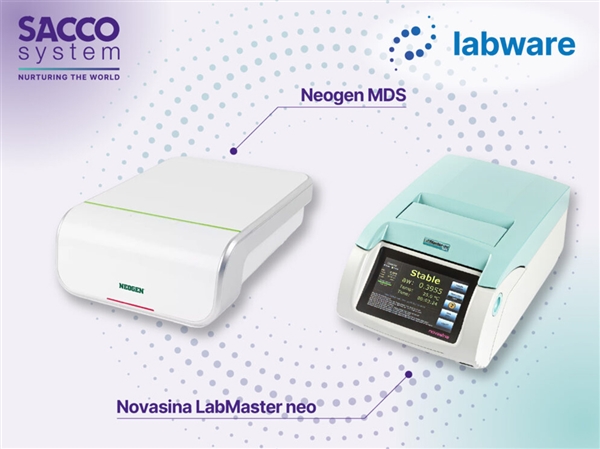
Advanced instruments (such as the Novasina LabMaster NEO series) adopt resistive electrolytic sensor technology:
-
Operation: Tracks changes in equilibrium relative humidity (ERH) within a sealed chamber by measuring changes in the electrical resistance of an electrolyte.
-
Advantages for the pharmaceutical sector: Unlike chilled mirror sensors, which suffer from inaccurate measurements caused by surface contamination from volatile substances and require frequent cleaning, the resistive electrolytic sensor is extremely stable, resistant to contaminants, and offers maximum accuracy and precision without the need for continuous maintenance.
Operational Insights: Degradation, Stability, Tracking, and Packaging
Water Activity and Microbial Safety
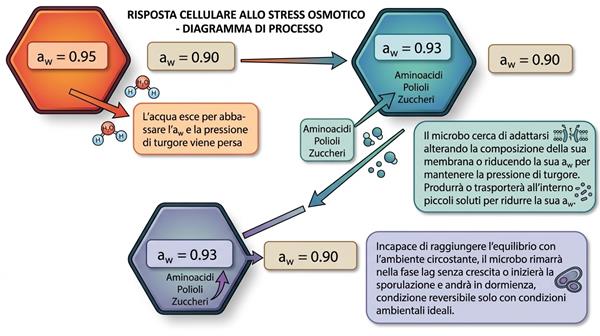
Microorganisms need access to water with a sufficient energy level to allow movement within the cell; this water is fundamental for maintaining turgor pressure and normal metabolic activities. The energy of the water surrounding the microorganism is described by water activity (aw): for water to enter the microorganism, the water activity inside the cell must be lower than that of the external environment. When a microorganism finds itself in an environment with lower water activity than its internal level, water flows out of the cell, reducing turgor pressure and causing metabolic activity to cease. Consequently, any strategy aimed at establishing control limits for microbial contamination risk — and the resulting reduction of routine microbial limit testing — must strictly rely on water activity measurements.
Water Activity and Degradation of Active Ingredients (APIs)
Many active pharmaceutical ingredients are subject to chemical degradation reactions, the most common of which is hydrolysis. Because hydrolysis depends on the molecular energy of water rather than its absolute quantity, measuring aw is essential to determine the reaction rate. Maintaining water activity below the critical threshold prevents the breakdown of active ingredient molecules, ensuring that drug potency and efficacy remain unchanged over time.
Water Activity and Shelf-Life Stability
The shelf life of a formulation depends on the dynamic interaction between chemical, physical, and microbiological stability. Controlling aw makes it possible to establish precise safety limits within which the product will not undergo structural alterations (such as changes in dissolution times) or drops in efficacy. A prime example is probiotic formulations, where maintaining an appropriate aw guarantees the survival and viability of bacterial cultures until the expiration date.
Tracking Moisture Variations via Water Activity
Although determining moisture content through methods such as loss on drying or Karl Fischer titration is an established practice, these techniques are destructive and often time-consuming. Water activity offers a fast, reproducible, and non-destructive method for tracking changes in product water content. Because aw and moisture content are interconnected through the sorption isotherm, measuring aw serves as a real-time indicator of potential moisture exchanges with the environment during manufacturing or storage phases.
Water Activity and Packaging Selection
Primary packaging (blisters, PE/glass bottles, strips) acts as a protective barrier against the external environment. Determining the critical aw of a drug allows exact calculation of the level of protection required by the packaging to prevent moisture migration throughout the entire storage cycle. In this way, formulators can select materials with optimal barrier properties (avoiding both under-design, which leads to drug degradation, and over-design, which causes unnecessary cost increases).
Conclusion
Water activity is an indispensable parameter for guaranteeing high-quality production output, reducing waste and batch recalls, and ensuring maximum therapeutic efficacy. The adoption of USP <922> now offers pharmaceutical laboratories a standardized methodological guide for integrating aw into daily quality control.