Counting colony-forming units allows estimating the amount of viable microorganisms present in a sample. For the data to be truly useful, the reading must be as consistent and reproducible as possible.
Interpretation can become complex in the presence of very small or closely spaced colonies, confluent growth, bubbles, residues, chromogenic media, or non-uniform distributions. Furthermore, different operators may apply slightly different criteria when distinguishing between colonies, aggregates, and artifacts.
When the number of samples increases, the time required for manual reading also becomes an important factor in laboratory organization.
Automation allows for significantly reducing the number of plates that need to be examined manually, thus limiting prolonged exposure to visual strain and improper postures.
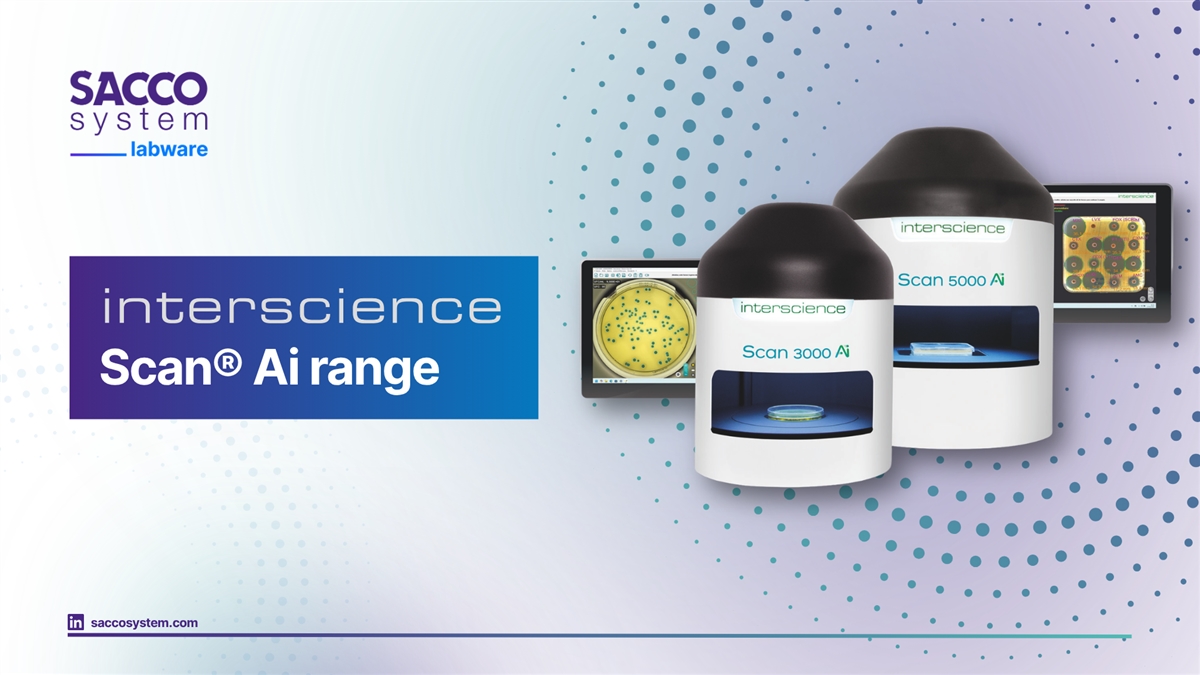
The Scan 3000 AI and Scan 5000 AI automatic colony counters reduce the visual fatigue associated with plate reading, thanks also to the ability to enlarge images using the zoom function, thereby facilitating detailed observation and evaluation of morphological characteristics.
How does counting change with artificial intelligence?
Automatic colony counters acquire a digital image of the plate and analyze it using dedicated software. In Scan AI systems, artificial intelligence supports colony recognition and distinguishes them from elements that should not be included in the count.
This approach allows for applying uniform reading parameters and managing plates characterized by colonies that differ in size, shape, or color.
The automatic result does not replace the microbiologist’s control: the operator can examine the image, verify the count, and, when necessary, manually add or remove detected colonies. Artificial intelligence thus becomes a support tool for the laboratory’s technical expertise, aimed at reducing variability linked to the operator’s subjective evaluation and decreasing the risk of errors due to fatigue or loss of focus.
The benefits of automation for the laboratory
Introducing an automatic colony counter can offer benefits that go beyond reducing reading times.
Applying uniform criteria helps limit differences in interpretation between operators, while the digitization of images and results facilitates storage, consultation, and traceability of analyses.
By reducing the time spent on repetitive tasks, operators can also focus on evaluating results and on activities requiring higher technical skills.
Adopting such technologies, potentially accompanied by a final verification by qualified personnel in doubtful or non-compliant cases, therefore represents a major improvement in working conditions, as it shifts the operator’s role from continuous manual reading to an activity more focused on supervision, validation, and anomaly management.
Scan 3000 AI and Scan 5000 AI: fast and standardized counting
Scan 3000 AI and Scan 5000 AI are automatic colony counters developed by Interscience to speed up and standardize plate reading in microbiological analyses.
Both systems allow you to:
-
detect colonies with minimum sizes down to 0.03 mm;
-
automatically count up to 1,000 colonies per second;
-
analyze pour, surface spread, and spiral or circular plated dishes;
-
work with chromogenic media and different culture supports;
-
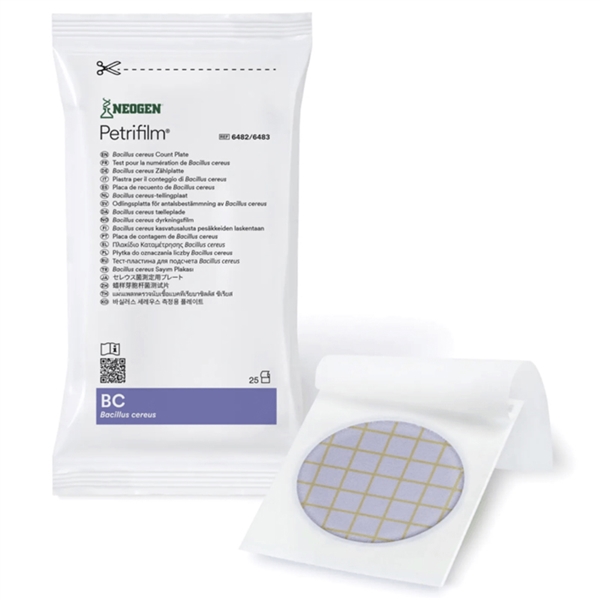
read Petrifilm™, MC-Media Pad™, Compact Dry™, Easy Plate™, and filtration membranes;
-
perform inhibition zone readings;
-
manually check automatic results;
-
store and export images and analysis data.
Interscience indicates a constant counting accuracy of up to 98% for Scan AI systems. Applying uniform parameters also contributes to reducing variability between operators and improving result comparability over time.
Scan 3000 AI: for Petri dishes up to 90 mm
Scan 3000 AI is designed for automatic counting on round Petri dishes with diameters between 55 and 90 mm.
It is a suitable solution for laboratories that mainly use standard formats and wish to speed up routine analyses, improving counting repeatability and digital management of results.
It can be used in various fields, including the food industry, environmental testing, pharmaceuticals and cosmetics, veterinary medicine, and research.
Scan 5000 AI: greater format flexibility
Scan 5000 AI shares the artificial intelligence-based counting features of Scan 3000 AI, but allows working with larger plate sizes.
It can analyze round Petri dishes with diameters from 55 to 150 mm and 120 mm square dishes. It is therefore recommended for laboratories that, in addition to traditional 90 mm dishes, need to handle larger formats or a wider variety of supports.
The choice between the two models depends mainly on the sizes and formats of the plates used in the laboratory, rather than on a different level of automation.
Artificial intelligence and technical expertise serving microbiology
Automating colony counting does not mean replacing the operator’s judgment, but providing them with a tool capable of speeding up reading, applying more uniform criteria, and preserving digital documentation of the analysis.
With Scan 3000 AI and Scan 5000 AI, artificial intelligence concretely enters the microbiological workflow, helping to improve speed, repeatability, and traceability without giving up laboratory oversight.
Sacco System Labware supports laboratories and quality control departments in selecting the configuration best suited to their applications and dish formats.