The characteristics of a beverage can vary depending on the raw materials, the formulation and the different processing stages. For this reason, relying exclusively on final product testing may not be sufficient.
Monitoring the main chemical parameters during production makes it possible to:
-
verify the quality and variability of raw materials;
-
check compliance with the formulation;
-
monitor the progress of any fermentation processes;
-
compare results between different batches;
-
identify any deviations more quickly;
-
support the development of new recipes.
The availability of results in a short time allows operators to act on the process without necessarily having to wait for the turnaround times of an external laboratory.
The limitations of traditional analyses
Many conventional analytical methods require manual preparation, laboratory glassware, different reagents and specialized personnel. Some parameters may also require complex equipment or relatively lengthy procedures, making them less suitable for frequent checks throughout production.
In these contexts, a rapid system does not necessarily replace official or reference methods, but can complement them in routine analyses and daily process monitoring.
CDR DrinkLab: simple and standardized photometric analyses
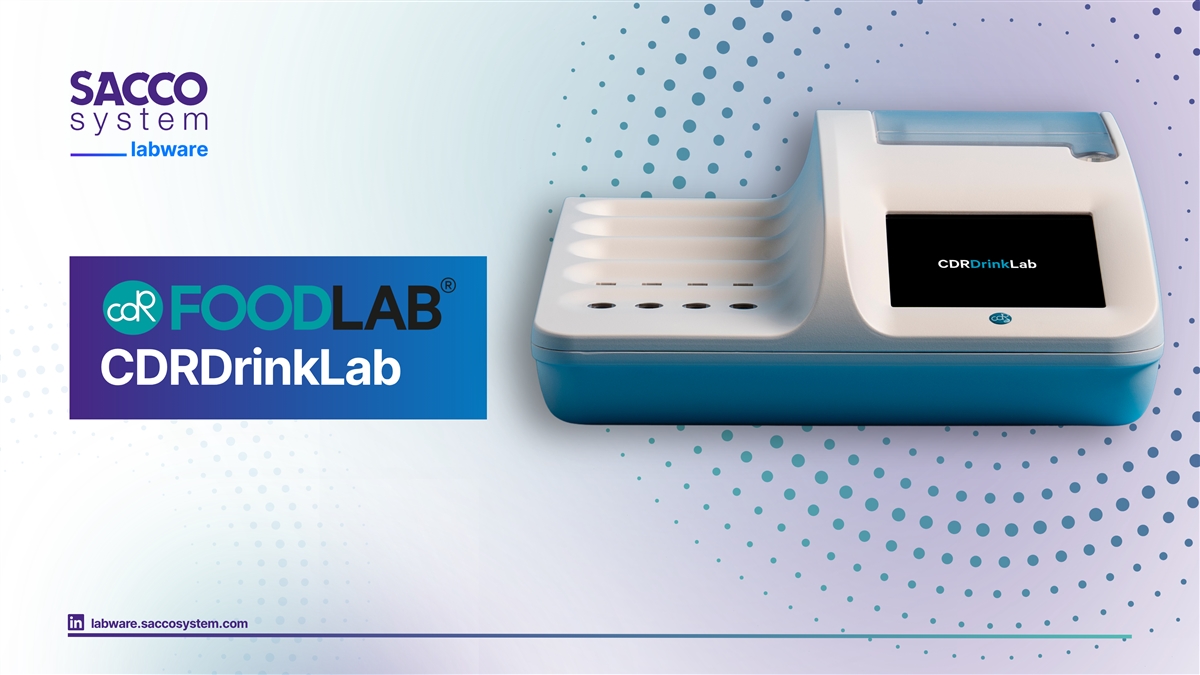
CDR DrinkLab is a system dedicated to the chemical control of beverages. It uses photometric methods and pre-vialed, ready-to-use reagent kits, reducing the manual operations required to prepare the analysis.
The operator adds the sample by following the guided procedure displayed on the touchscreen. The instrument manages the steps required by the method, from thermostatic control to photometric reading, and automatically processes the result.
The standardization of procedures helps to reduce preparation errors and make controls more repeatable, even when analyses are carried out by different operators.
Which beverages can be analyzed?
CDR DrinkLab can be configured according to the matrix to be analyzed. The applications listed in the product data sheet include:
-
soft drinks and ready-to-drink beverages;
-
fruit juices;
-
plant-based beverages;
-
kefir;
-
tea;
-
water;
-
wine;
-
cider.
The system can also be configured to work with multiple matrices. The range of available analyses varies according to the chosen configuration and the specific reagent kits used.
Depending on the beverage, parameters such as sugars, total acidity, organic acids, caffeine, alcohol content and certain mineral components of water can be monitored.
Multiple analyses and traceable results
CDR DrinkLab makes it possible to perform up to 16 determinations simultaneously, analyzing multiple samples or different parameters on the same sample.
The instrument is supplied pre-calibrated and does not require periodic calibration by the operator. At start-up, it also performs an automatic check of the reading system.
Results can be stored in the internal memory and exported in CSV format. The system also includes a color touchscreen, USB and LAN connections and an integrated printer, making it easier to manage and trace the analyses performed.
The benefits for quality control
The use of pre-vialed reagents and guided procedures helps simplify analytical work and reduce the manual activities most prone to error.
The main benefits of the system include:
-
reduced or unnecessary sample preparation, depending on the analysis;
-
results available within a few minutes;
-
the possibility of carrying out multiple determinations simultaneously;
-
simple and standardized procedures;
-
use both in the laboratory and close to the production area;
-
storage and export of results;
-
reduced use of reagents and laboratory glassware.
Quality control closer to production
Having access to rapid results during the process makes it possible to monitor raw materials, formulations and finished products more frequently. In this way, the laboratory can identify any deviations more quickly and provide useful information to production.
CDR DrinkLab combines speed, ease of use and standardization in a single system, providing manufacturers and laboratories with a versatile tool for beverage quality control.